First Biab disaster.

Post #1 made 14 years ago
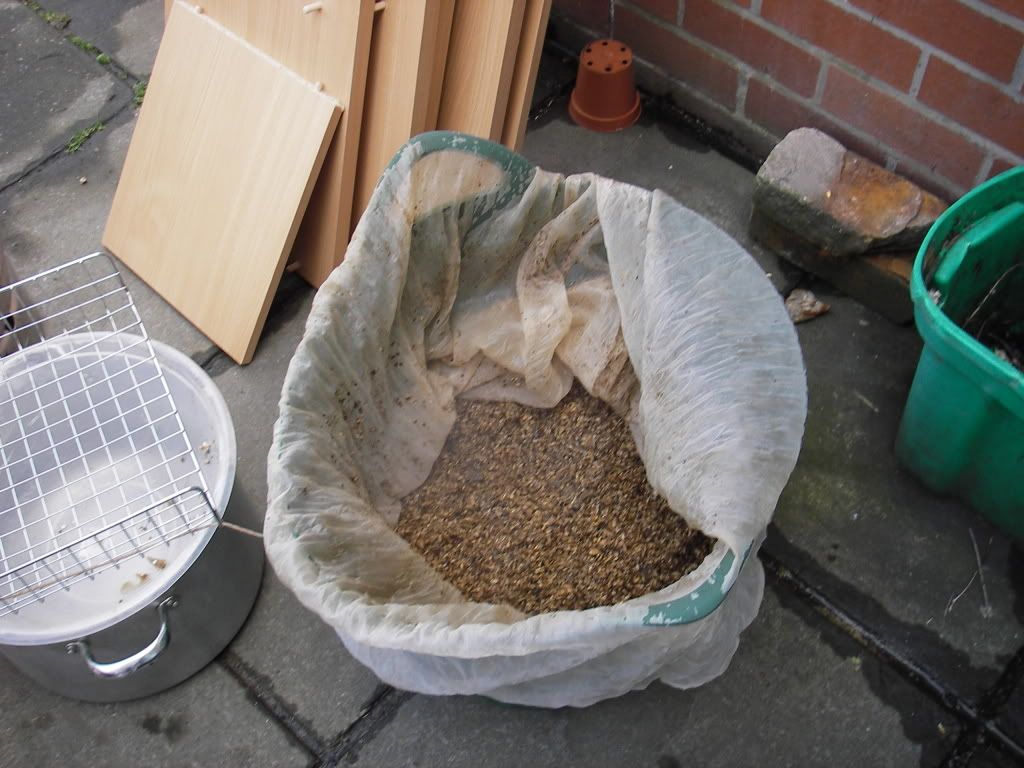
:sad: Hello, Did my first Biab yesterday and had a lot of problems. Was brewing a Blind Pig IPA with 15 pounds of grain. I did the estimate of 3.5 quarts of water per pound and had way too much water. After I did the grain for 90 minutes at 166 degrees F. My temp thermometer has a point on it and I put a few small holes in the Voile bag that my wife had made. When I went to dump the wet grain I tore two big holes in the bottom of the bag. Any suggestions on a better material to use? After 90 minutes of the boil I had way too much water so I boiled for an extra 90 minutes. I got down to the 5.24 gallon mark and hit the targeted OG of 1069. I used my chiller and got the wart down to 77 degrees. The sample I put in my hydrometer was full of trub. I then transferred to my primary fermenter (6.5 gal carboy) through the 1/2 inch stainless ball lock valve on my 15 gallon stainless brew kettle. I transfer through a straining bag in a funnel into the glass carboy. When I got towards the end there was so much trub that I lost about a gallon of beer. I then pitched the yeast. Today it is fermenting very well. Any ideas on what caused the very excessive amount of trub? Better material for the bag? Any other comments or suggestions would be gladly received. This first Biab was quite the opposite of time and labor saving for me. Others seem to do just fine with Biab so I would expect that I should be able to do so as well. I do not want to abandon this technique due to a bad first experience. Regards, Jerry

Post #2 made 14 years ago
Hi Jerry, did you use the BIAB Calculator to determine how much water?

I would either put a guard on your probe or remove it

You might've got a lot if trub because of the hole you tore in your bag, although a strong whirlpool at knockout is a good way to reduce trub into the primary
Fermenting: -
Cubed: -
Stirplate: -
On Tap: NS Summer Ale III (WY1272), Landlord III (WY1469), Fighter's 70/- II (WY1272), Roast Porter (WY1028), Cider, Soda
Next: Munich Helles III

5/7/12

Post #3 made 14 years ago
Sorry to hear that you've had a disaster Jerry.

The first thing I'd do is get rid of your temp' probe or figure out a way to shield it. I recall someone using a stainless steel sieve I'll try and find the post.

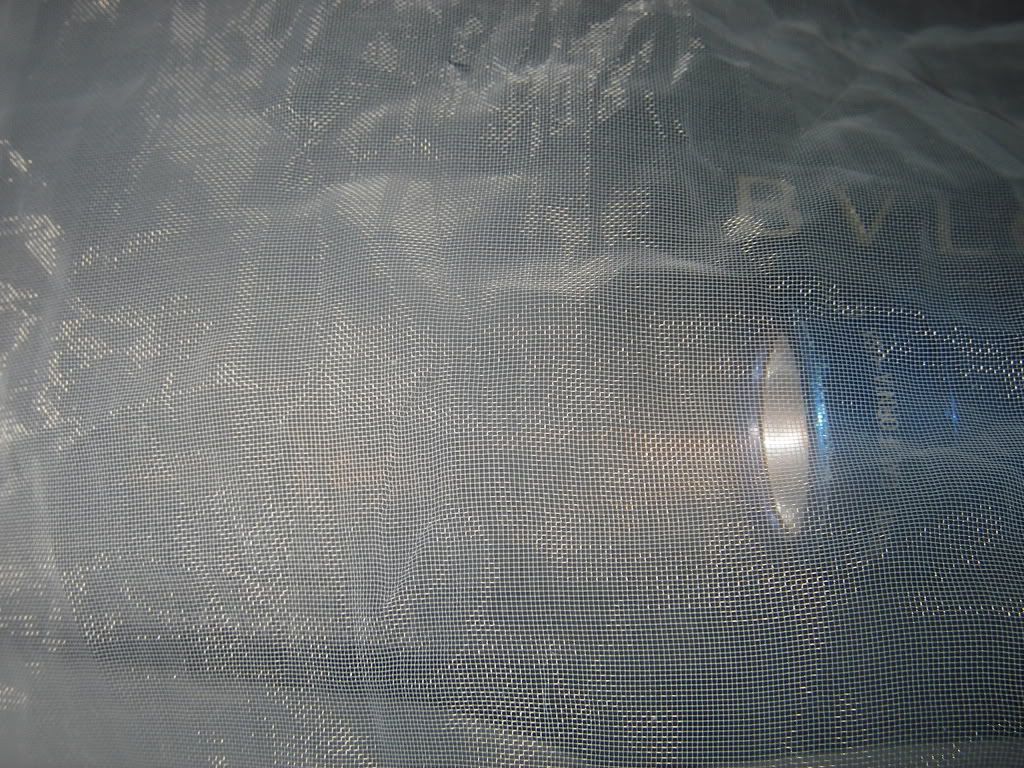
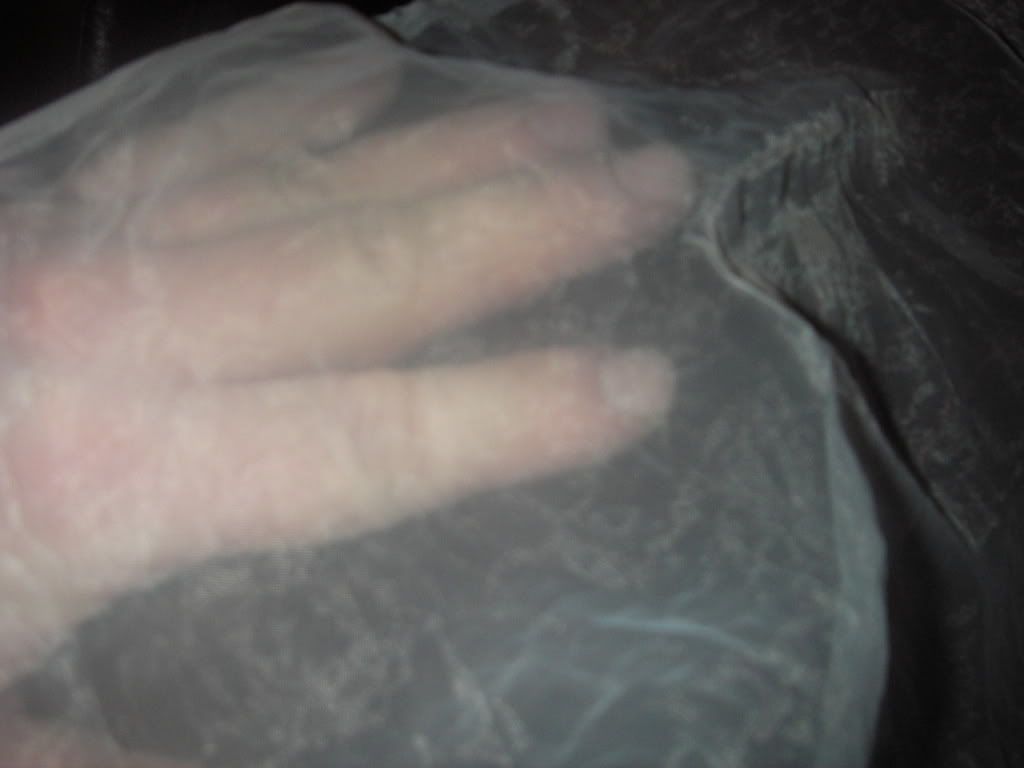
What kind of voile are you using? mine has a very fine weeve. If I try to sieve flour it just allows the finest particles through.

As to trub you didn't mention if you used whirfloc or irish moss, I use one or the other then whirpool the wort once cooled, I then leave it for 30min minimum and them syphon from the sides. As you have a valve would it be possible to tip your vessle so that your valve is on the high side, the trub should then settle on the low side and stay in the kettle.

Glad to see you aren't giving up :clap:

Yeasty
Why is everyone talking about "Cheese"
    • SVA Brewer With Over 50 Brews From Great Britain

Post #4 made 14 years ago
:thumbs: I used water per pound of grain as stated on the Podcast from Brewsmith with one of the Biab developers from Australia. It said to use 3 to 4 quarts per pound of grain so I used 3.5 which was about 12.5 to 13 gallons. Next time I will use 10 gallons. If I was short on water I could add it to the biab to bring it up to 5.25 gallons assuming it is OK to do this. The holes in the bag were very small. Thanks for the reply.
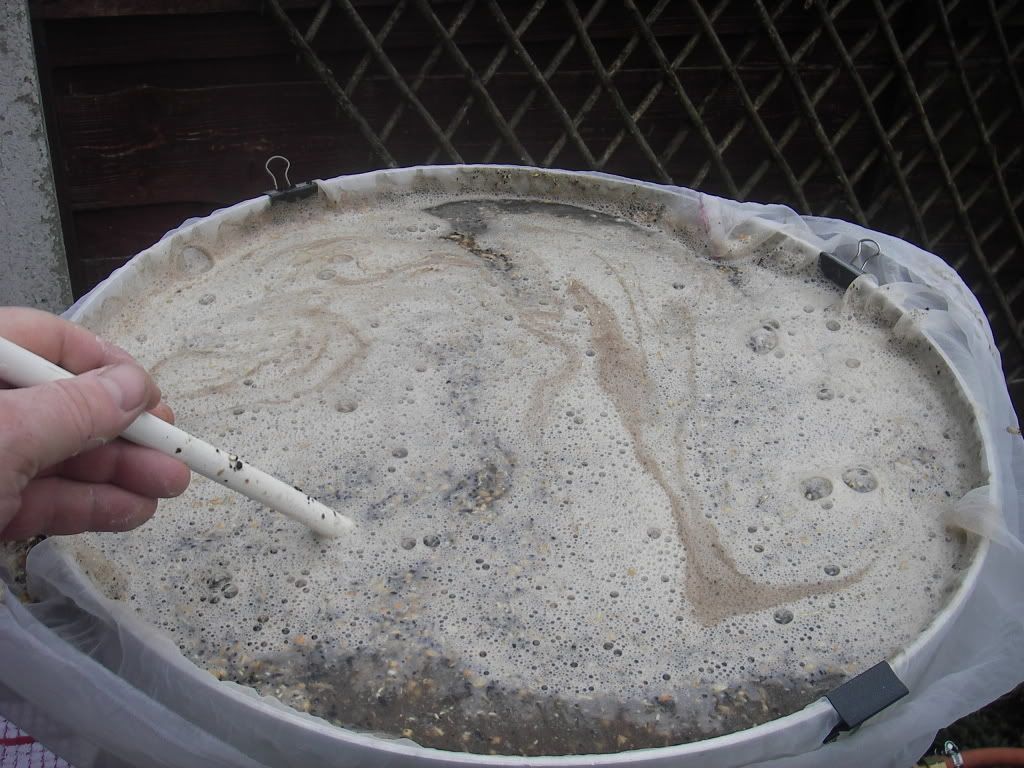
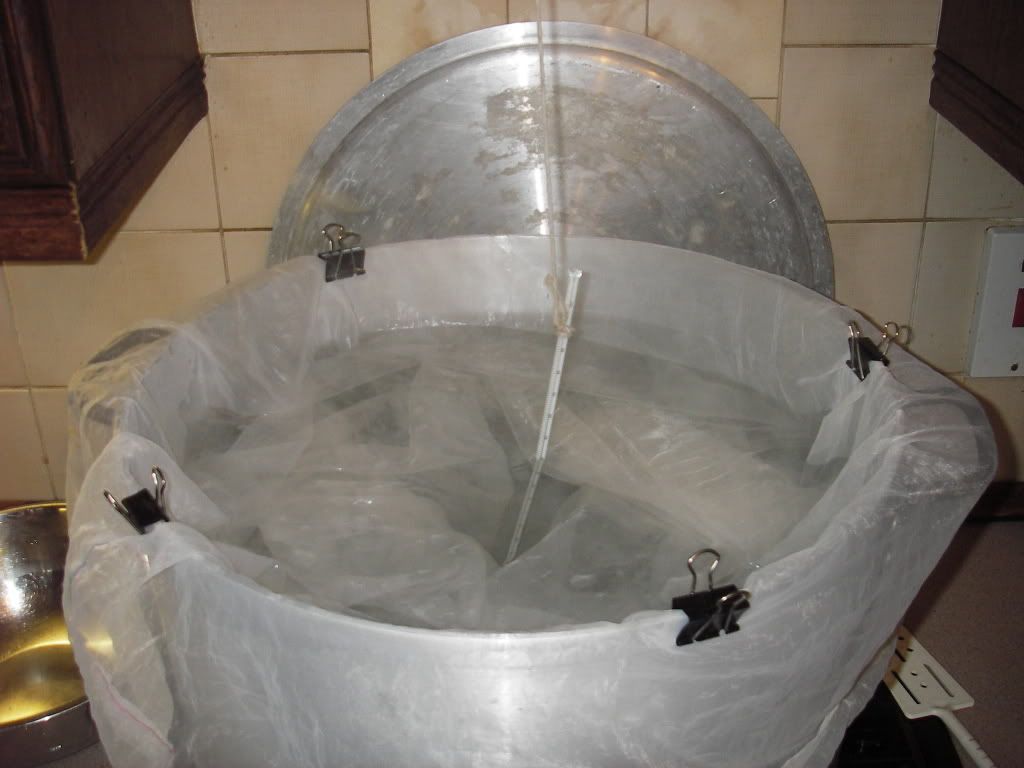
Yeasty, Thanks for the temp probe suggestion. I have a temp guage built into my brew pot that I will use. I had also had the idea that the mesh of my bag was not fine enough as you just confirmed for me. I used whirlfloc. Great idea to tip my brew pot away from the valve and wait for 30 minutes. I will try that. I conclude that most of my problems are from too coarse of a mesh bag. What material do you use? I have heard that polyester and nylon are ok to use. My brew pot is 18 inches across. I used my wifes stainless collander on the bottom of the pot that was not very adequate. What is a suitable bottom to use in the brew pot that will not break the bank? I do not give up as I believe that if someone else can do it so can I. Regards, Jerry

Post #7 made 14 years ago
Here is some pictures showing the voile I use. Its hard to get one picture that shows exactly what the material is like so I've added a selection.

Image
Image
Image
Image
Image
The one with the torch shows the weave really well, I may try this again with a steel rule so as to get a sense of scale. The torch is a mini Maglite not one of there large models

Yeasty
Last edited by Yeasty on 12 Sep 2011, 04:09, edited 5 times in total.
Why is everyone talking about "Cheese"
    • SVA Brewer With Over 50 Brews From Great Britain

Post #8 made 14 years ago
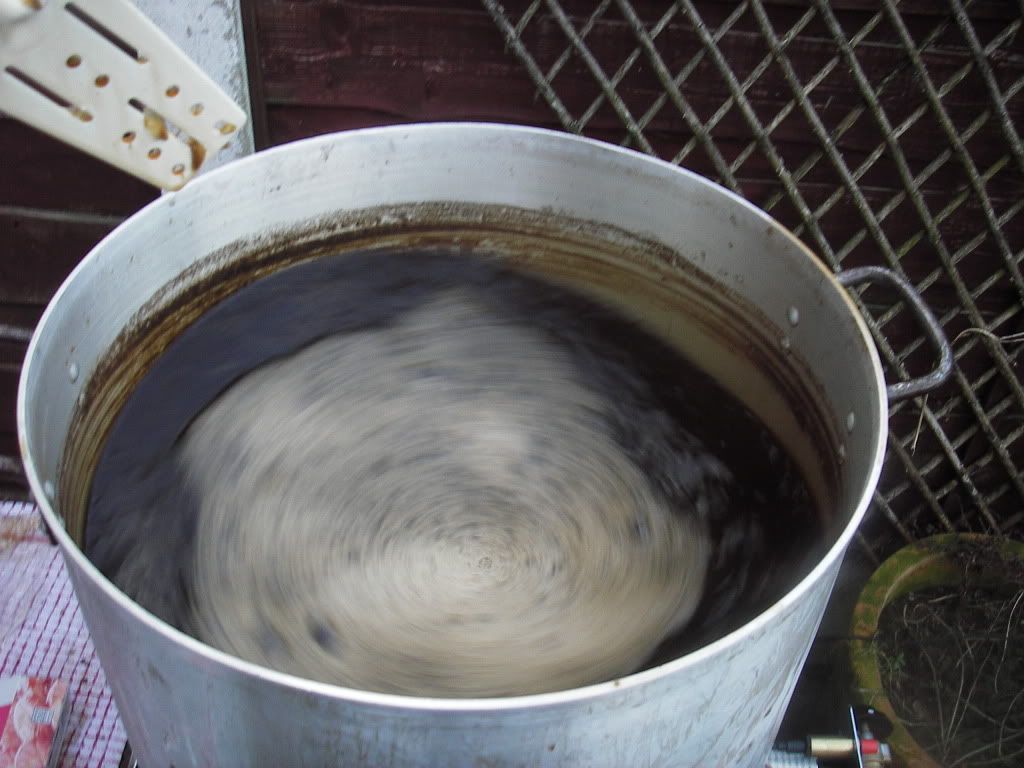
Here's a picture of my whirlpool. Don't stare at it too long as you may go dizzy.. :lol: :lol:
Image
Last edited by Yeasty on 12 Sep 2011, 04:11, edited 5 times in total.
Why is everyone talking about "Cheese"
    • SVA Brewer With Over 50 Brews From Great Britain

Post #10 made 14 years ago
Yeasty,
Thanks for the pictures. I can tell it is much finer than what I am using. My crush appeared to be OK but this is the first all grain Biab I have done. Looks like mordantly and I will be knocking off the same fabric store. My wife says that Joanne fabrics has the finer mesh. What are you using in the bottom of your kettle to keep the bag from touching the bottom? Also, what temps are you using. Regards, Jerry

Post #11 made 14 years ago
speaking of burned bag, i also had that issue.. strangely enough it just looks like a bizarre stain, not melted material. i would say keep the bag taught enough to not rest on the bottom like yeasty with the binder clips.
MoRdAnTlY [Mr. Wolf '91 - '11]

Post #12 made 14 years ago
Round cake rack :), about 1cm high

The material we use in Australia is polyester Swiss voile, it's used as curtain sheer
Fermenting: -
Cubed: -
Stirplate: -
On Tap: NS Summer Ale III (WY1272), Landlord III (WY1469), Fighter's 70/- II (WY1272), Roast Porter (WY1028), Cider, Soda
Next: Munich Helles III

5/7/12

Post #13 made 14 years ago
Disaster? JerryMan, do you not have 5 gallons of wort fermenting away right now? You made beer, therefore I would consider this first brew session a success! (You just need to "tune" your process a bit). ;)


My
glass
is
always
half
full

---Todd
WWBBD?
    • SVA Brewer With Over 100 Brews From United States of America

Post #14 made 14 years ago
Hi there jerryman,

Congrats on your first brew. Great to see you dive in :clap:

Your water would have been way too much. The problem here is that you were brewing an IPA which is a heavier beer than normal. I never thought of it until your post* but, "Grain to Liquor Ratio," is really not an appropriate term to be used with BIAB as this ratio refers to the mash ratio whereas BIAB is a full-volume brewing method where the mash and sparge is combined.

Before your next brew, ask for some help here and your volumes etc will come out a lot closer using the calculator. (There's a US version I know of that can be used until the new calculator comes out.)

The only other thing that is worrying me with your brew is your mash temperature of 166 F. This is very high - way too high in fact. 149 F / 150 F would be more typical temperatures for an IPA and the majority of styles. The highest temp you would mash at should really never exceed 158 F and this would be very rare. So check this one out before your next brew.

Don't worry about the difficulties you had - it just speeds up the learning process :P. I have learned something from your first brew (see * above), unfortunately at your expense :whistle:. The learning curve is pretty quick so your next brew should be heaps easier :peace:.

Maybe do an APA or on your next brew so as you are dealing with figures that are mor mainstream?

Good on you :peace:
PP
If you have found the above or anything else of value on BIABrewer.info, consider supporting us by getting some BIPs!
    • SVA Brewer With Over 100 Brews From Australia

Post #15 made 14 years ago
Thanks everyone for all of the input. I do use binder clips. The temp I mashed at is lower than the recommended temp from the Beersmith Podcast with one of the Biab developers as I thought it was too high also. I will mash at the lower temps as recommeded here. Thanks for the info on the mesh material and the cake rack. It appears that it does not have to be stainless. I will look at the Beersmith II ratios for BIAB in regards to the water required. Yes, my first BIAB was a success as I learned alot and got about 4 gallons of beer out of it. Thanks to all, Jerry

Post #16 made 14 years ago
Jerry,

I seriously recommend reading The Commentary here and getting some advice on using The Calculator before your next brew - just ask your questions in this thread. BeerSmith2 is very easy to use incorrectly. In fact, you need to read masses of information to make sure you don't use it incorrectly!

Any podcast between a US user and a metric user is prone to error though I can't recall that particular mash temperature error on the BeerSmith podcast or of hearing of it before. Did they really say 'mash at 166F' or were they referring to a mash out temperature?

:peace:
PP
Last edited by PistolPatch on 12 Sep 2011, 20:52, edited 5 times in total.
If you have found the above or anything else of value on BIABrewer.info, consider supporting us by getting some BIPs!
    • SVA Brewer With Over 100 Brews From Australia

Post #17 made 14 years ago
PistolPatch wrote:Jerry,

I seriously recommend reading The Commentary here and getting some advice on using The Calculator before your next brew - just ask your questions in this thread. BeerSmith2 is very easy to use incorrectly. In fact, you need to read masses of information to make sure you don't use it incorrectly!

Any podcast between a US user and a metric user is prone to error though I can't recall that particular mash temperature error on the BeerSmith podcast or of hearing of it before. Did they really say 'mash at 166F' or were they referring to a mash out temperature?

:peace:
PP
Just read my notes and they say to mash at 76 degrees celsius which according to my chart is 168.8 Fahrenheit degrees. Says to go 2 degrees higher for final mash out. Perhaps I heard or wrote this wrong. I will listen to it again to confirm. It is a 35 minute Podcast. Which calculator are you referring to and where do I find it? Thanks, Jerry
Last edited by JerryMan on 12 Sep 2011, 21:10, edited 5 times in total.

Post #19 made 14 years ago
I listened to the podcast again and it never did state the regular mash temp. It only stated the final mash-out temp. There was a link to an article or summary of BIAB and it stated the correct temps of 150-156 degrees for BIAB with a mash-out of 168 degrees F.

Post #20 made 14 years ago
JerryMan wrote:Which calculator are you referring to and where do I find it? Thanks, Jerry
Good on you Jerry for the above links and corrections.

The calculator can be found here. It's only a spreadsheet and has no fancy tools but the main figures and functionality are pretty good. I'm not saying you will instantly understand it but I am saying that using The Calculator will require a lot less study and questions for you to get fully 'educated' on brewing figures.

There is a US adaptation of The Calculator posted here. (That's also a great recipe!)

Brewing numbers and terminology have been bastardised to a point of being useless. The results of any brew can be made to fit, for example, a 'batch size' - a term that means nothing. I think the only place you'll find brewing terms and numbers that actually add up and that are helpful is on this site. I'm deadly serious here.

The above paragraph is probably the hardest thing for new brewers to come to grips with because, for any brewing software to be incorrect should, quite rightly, be unbelievable to any brewer. Most brewers however, new and old, aim to get their figures matching the software.

Was that a rant? :lol:
PP
Last edited by PistolPatch on 12 Sep 2011, 23:03, edited 5 times in total.
If you have found the above or anything else of value on BIABrewer.info, consider supporting us by getting some BIPs!
    • SVA Brewer With Over 100 Brews From Australia

Post #21 made 14 years ago
And others merely rewrite the software ;)
Fermenting: -
Cubed: -
Stirplate: -
On Tap: NS Summer Ale III (WY1272), Landlord III (WY1469), Fighter's 70/- II (WY1272), Roast Porter (WY1028), Cider, Soda
Next: Munich Helles III

5/7/12

Post #23 made 14 years ago
Spent some time in Beersmith 2 and did a BIAB for a Belgian Winter Wonder Warmer. Looks like it may be ok but I am not sure. I posted the profile and brew steps in the "convert a recipe" thread and am waiting to see how far off I am. I think that is where I should have put it but am not positive. Really would like to get my water management down much better than I have so far. Have done some extracts but only one BIAB so far and I used way too much water. Jerry

Post #24 made 14 years ago
Hi Jerry,

Good to see you're giving it another go.

I see you used Beersmith, and was wondering if you've had a look at the calculator. Its really the tool to use when starting out. Once you have your pot diameter entered into cell "B13" the water volumes are calculate for you.

Also if you are unsure about your Mash volume you can always go short on your water as its easier to add than to take away.

:luck:

Yeasty
Why is everyone talking about "Cheese"
    • SVA Brewer With Over 50 Brews From Great Britain

Post #25 made 14 years ago
Yeasty,
I have used the USA version of the calculator here. I have to convert every field from metric using printed tables that I have and a calculaor which is very time consuming. I do not see how the US version saves any time unless I am missing an automatic conversion feature on the calculator. I did input and convert all of the numbers to include cell "B13". All of the numbers correlate to Beersmith but the amount of grain per you calculator is 15.57 pounds and the actual recipe is 14.5 pounds plus 4 ounces of malto dextrine. The beersmith mash numbers are 60 minutes at 156 degrees with a 10 minute mash-out at 168 degrees and cannot be changed as far as I can tell. Your calculator refers to a 90 minute boil but says nothing about mash time. This is the best that I can get these two calculators to match. I am concerned that the grain bills do not match. Any ideas on what I may be doing wrong in either? Thanks, Jerry
Post Reply

Return to “Brew Day Stories and/or Pics”

Brewers Online

Brewers browsing this forum: No members and 13 guests